Moles are common and usually harmless, but regular skin self-exams can help you spot changes that may need a provider’s attention. Berman Skin Institute (BSI) offers mole checks and skin cancer screenings, so you can get professional guidance about changes in your skin.
Checking for the Signs of Skin Cancer
Melanoma is a type of cancer, and treatment is often more successful when it’s caught early. Fortunately, there are melanoma warning signs you can look for in a skin self-exam. To perform a skin self-exam, check your skin from head to toe, including areas that are usually covered by clothing.
Use a hand mirror and a full-length mirror to check your body from multiple angles. Check between your toes, on your palms, on your scalp, under each breast and in your armpits. Work methodically, from your head to your feet, so you don’t miss any parts of your skin.
The ABCDEs of Melanoma Symptoms
During your skin self-exam, look for the ABCDEs of melanoma:
- Asymmetry: Look for moles where one side looks different than the other.
- Borders: Take note of any moles with uneven, poorly defined or jagged borders.
- Color: Moles come in many colors, but talk to a provider if any of your moles have multiple colors or uneven coloring.
- Diameter: Talk to a provider if you notice moles that are about 6 millimeters or larger, though smaller spots can still be melanoma.
- Evolving: If a mole or lesion is changing or looks different than the rest of your moles, get a screening.
Even if you notice one or more of these symptoms, it does not mean you have cancer. However, you will want to rule it out by speaking with a provider who can accurately evaluate your skin. Your provider may remove a concerning mole and send the tissue to a lab to check for cancer.
If a mole changes, bleeds, hurts or looks unusual, schedule a skin cancer screening, even if it doesn’t have any of the ABCDE characteristics. You should also make an appointment for other skin changes, wounds or dry spots that won’t heal.
Skin cancer warning signs can be subtle at first, so regular evaluations can help protect your health, especially if you have fair skin or a family history of skin cancer. During your visit, your provider may recommend a screening based on your skin and risk factors.
Contact Us for a Mole Check
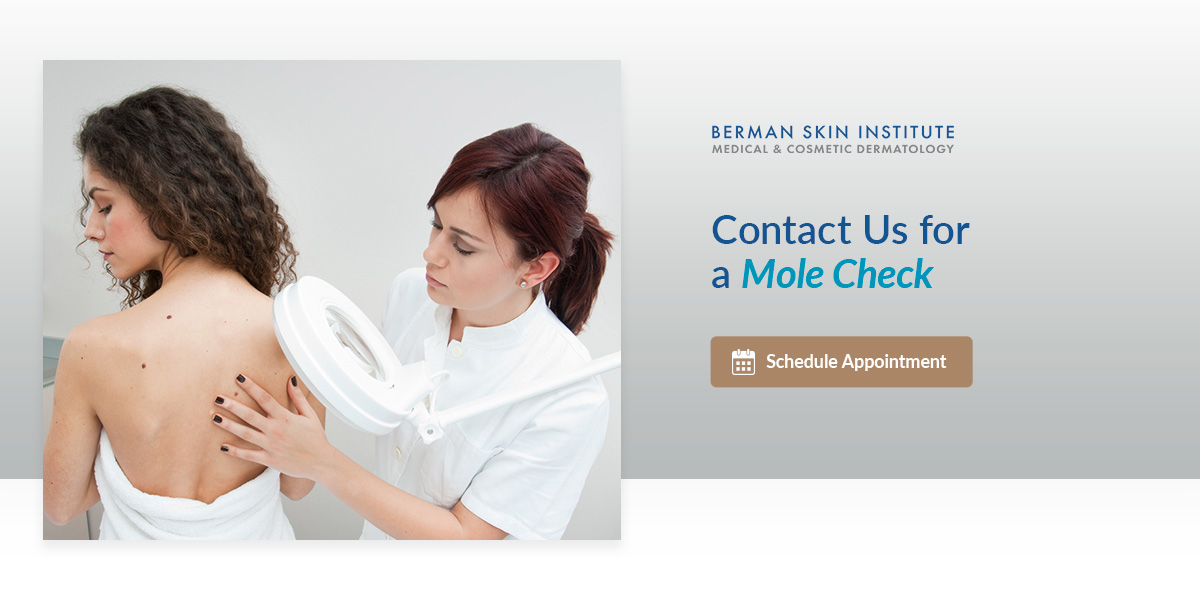
If you notice skin changes or any mole that you’re not sure about, BSI offers screenings and visits with dermatologists. Our providers use advanced technology and a patient-first approach to help you better understand your skin.
Schedule an appointment today.