Platelet-based treatments have become a popular, natural option for improving skin quality and supporting hair restoration. You may already be familiar with platelet-rich plasma (PRP), but a newer option — platelet-rich fibrin (PRF) — is quickly gaining attention for its longer-lasting benefits.
If you’re exploring regenerative treatments, understanding the differences between PRF and PRP can help you decide which approach aligns best with your goals. Schedule a consultation with Berman Skin Institute to learn more about both options.
What Is PRP?
PRP is created by drawing a small amount of your blood and spinning it in a centrifuge at high speed. This process separates the platelet-rich plasma, which contains growth factors that support healing and tissue repair. PRP has been used for years in aesthetics and medicine, primarily for hair restoration, acne scar treatment and overall skin rejuvenation.
Once injected, PRP delivers a concentrated burst of growth factors, but these signals are released relatively quickly. As such, PRP treatments may require more frequent sessions to maintain the results.
What Is PRF?
PRF is considered the next evolution of platelet therapy. Like PRP, it uses your own blood, but the preparation process is different. PRF is spun at a lower speed without anticoagulants, allowing it to retain more platelets, white blood cells and fibrin.
This fibrin matrix allows growth factors to be released more slowly over time. The result is a treatment that supports longer-lasting stimulation, making PRF especially popular for delicate areas. Common applications include under-eye rejuvenation and advanced PRF for hair loss protocols.
PRF vs. PRP: Key Differences
While both treatments are autologous (using your own blood), there are important distinctions:
- Composition: PRF contains fibrin and higher concentrations of regenerative cells, while PRP is more fluid.
- Longevity: PRF releases growth factors gradually, while PRP releases them more rapidly.
- Treatment areas: PRF is often preferred for under-eye treatments and skin texture refinement, while PRP remains widely used for hair restoration.
- Recovery time: The recovery time for PRF and PRP is often similar, with mild swelling or redness that typically resolves within a few days.
What Areas Can PRF and PRP Treat?
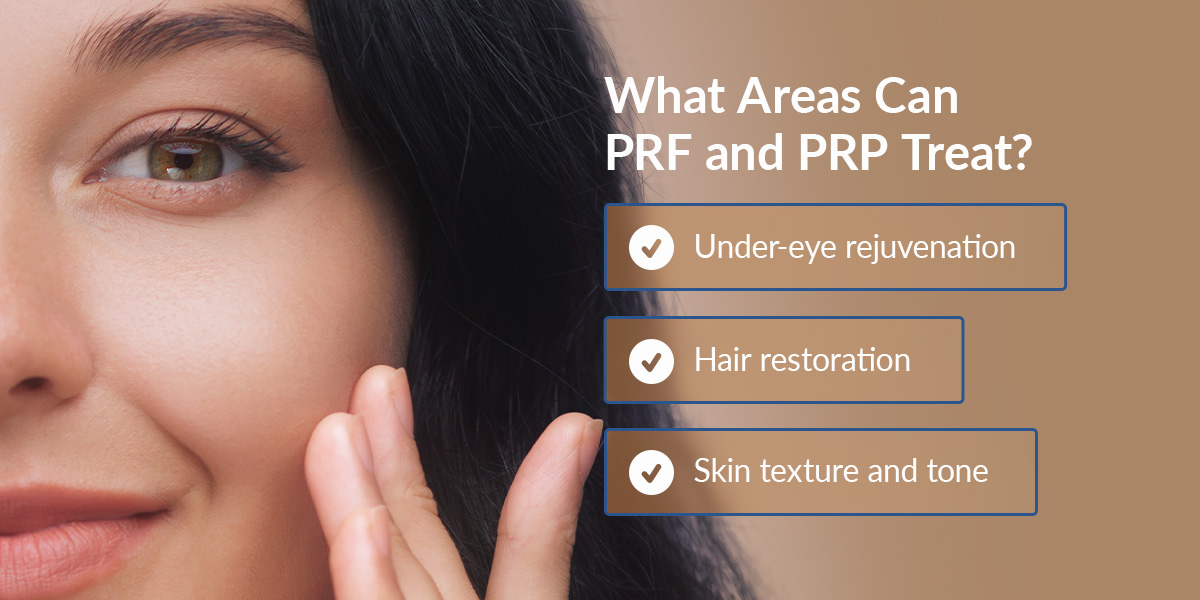
Both therapies are versatile and may be recommended for:
- Under-eye rejuvenation, though PRF’s structure can offer smoother, more gradual improvement.
- Hair restoration, supporting follicle health and thickness.
- Skin texture and tone, including fine lines and acne-related concerns.
Your provider will assess your skin type, goals and medical history to determine the most suitable option for you.
Cost, Results and What to Expect
PRF treatment costs in the Bay Area can vary depending on the treatment area and the number of recommended sessions. Curious about before-and-after under-eye PRF results? Ask your provider to show real patient transformations and discuss how quickly improvements appear.
Which Option Is Right for You?
Choosing between PRF and PRP depends on where you’re being treated, how long you want results to last and your overall goals. A personalized consultation at Berman Skin Institute helps ensure you receive the most effective option for your skin or hair concerns.
If you’re curious about PRF, PRP or other regenerative treatments, scheduling a consultation is the best next step to explore your options confidently.