Summary: The best way to treat hyperpigmentation depends on your skin tone and the type of discoloration:
- Sun and age spots: Sun spots may respond well to Intense Pulsed Light (IPL) or BroadBand Light (BBL).
- Melasma: Options such as chemical peels or tranexamic acid may help improve its appearance.
- Post-inflammatory hyperpigmentation (PIH): Microneedling, gentle peels or topical treatments may benefit PIH.
- All skin tones: Daily broad-spectrum sunscreen (SPF 30+) helps protect your results as ultraviolet (UV) rays can darken spots.
Not sure where to start? Berman Skin Institute can build a personalized plan for your skin.
Why Hyperpigmentation Happens
Hyperpigmentation occurs when the skin produces excessive melanin in response to triggers such as sun exposure, hormonal changes, inflammation and skin injuries.
While the cause can vary, so does the treatment — what works beautifully for sun spots may worsen melasma, and specific lasers must be used with extra caution on deeper skin tones.
Types of Dark Spots and How We Treat Them
Some of the most common dark spots include:
Sun Spots and Age Spots (Solar Lentigines)
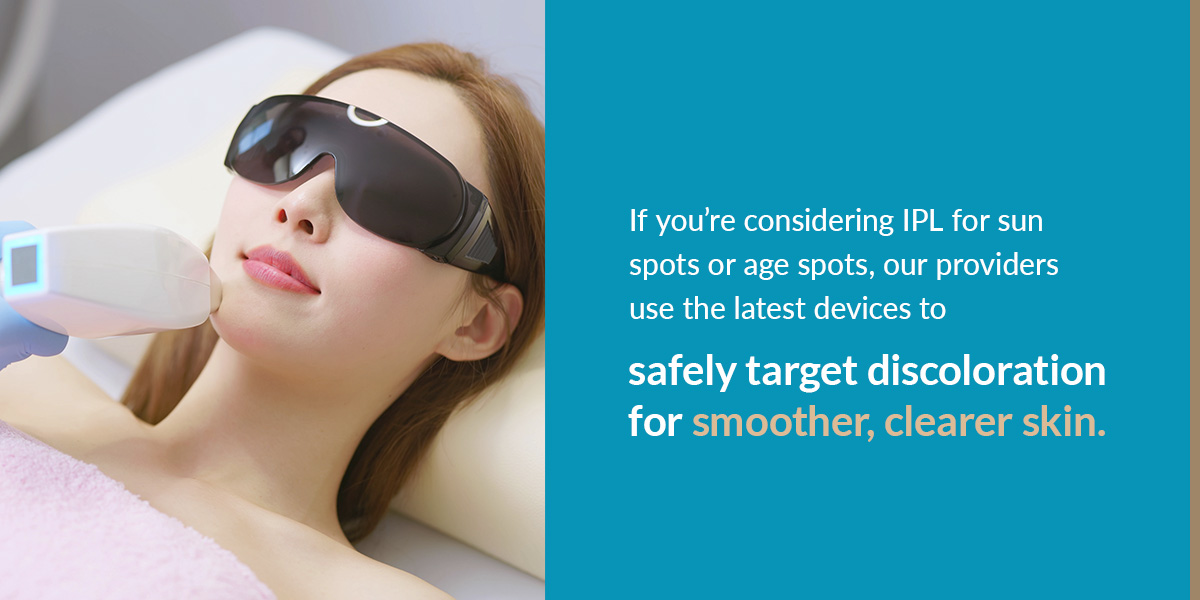
If you’re considering IPL for sun spots or age spots, our providers use the latest devices to safely target discoloration for smoother, clearer skin.
Most effective options:
- IPL (Intense Pulsed Light) for lighter skin tones.
- BBL® (BroadBand Light) for face, neck, chest and hands.
- Topical treatments with brightening ingredients.
Your provider personalizes your plan to help you find the best treatment for dark spots based on your skin tone and unique needs.
Melasma
When it comes to treating melasma, lasers and peels are common options. For most skin types, gentle chemical peels offer a safer starting point than laser alone, but your provider will recommend what’s best for your pigmentation.
Safe, effective melasma treatments may include:
- Chemical peels to lift surface pigment gradually.
- Azelaic acid for gentle yet effective brightening.
- Tranexamic acid (oral or topical) to reduce stubborn discoloration.
- Low-energy laser or light settings in select cases, performed with extreme caution.
Post-Inflammatory Hyperpigmentation (PIH)
PIH happens after inflammation — the pigment left behind after acne, eczema, bug bites, waxing or ingrown hairs.
Best treatments for PIH include:
- Microneedling to support skin remodeling.
- Gentle chemical peels.
- Azelaic acid or retinoids to encourage cell turnover.
- Laser treatments designed for darker spots without overheating the skin.
Hyperpigmentation Treatment for Skin of Color
Darker skin tones (Fitzpatrick IV–VI) need a careful approach to avoid new pigmentation or scarring. At Berman Skin Institute, your provider may use:
- Non-ablative lasers with customized settings.
- Microneedling or chemical peels that support pigment normalization.
- Iron-oxide–based tinted sunscreens for visible-light protection (critical for melasma and PIH).
Ingredients That Make a Difference
Curious about azelaic vs. tranexamic acid for pigment? Both are dermatology favorites — azelaic acid is gentle enough for daily use on sensitive skin, while tranexamic acid is often chosen for its targeted effects on stubborn patches of discoloration.
Here are some of the best ingredients for hyperpigmentation and dark skin:
- Azelaic Acid: Great for melasma, acne-related PIH and sensitive skin
- Tranexamic Acid: Helps reduce persistent pigment when used consistently in topical or oral form
- Retinoids: Encourages cell turnover and helps fade uneven tone over time
- Vitamin C: Brightens the skin and protects from environmental damage
The Importance of Using Sunscreen Every Single Day
Daily sunscreen is nonnegotiable when treating hyperpigmentation. Mineral formulas are often recommended for melasma and PIH because they block UVA, UVB and visible light.
Look for:
- SPF 30+ or SPF 50+.
- Tinted, iron-oxide–based sunscreens.
- Non-comedogenic options if you’re breakout-prone.
Your provider can help you choose a formula that fits your skin type and routine.
FAQs About Treating Hyperpigmentation and Dark Spots
Here are answers to common questions about hyperpigmentation and how to treat it.
What Is the Best Way to Treat Hyperpigmentation?
The best way to treat hyperpigmentation starts with figuring out the type — sun spots, melasma or post-inflammatory hyperpigmentation — and finding the right fit for your skin tone and depth of pigmentation.
A routine that pairs daily broad-spectrum sunscreen, topical brightening ingredients and professional treatments like chemical peels or laser therapy tends to give you the best results. Your provider at Berman Skin Institute can develop a personalized plan based on your concerns.
What Is the Fastest Way to Fix Hyperpigmentation?
To fix hyperpigmentation, in-office treatments like chemical peels, BroadBand Light (BBL) and microneedling tend to work faster than topical products alone. That said, even professional treatments take time, Most people see real improvement after a series of sessions. Pairing in-office care with daily sunscreen and a targeted skincare routine at home helps you maintain and build on those results.
Can Hyperpigmentation Be Treated at Home?
Topical ingredients like vitamin C, azelaic acid, tranexamic acid and retinoids can gradually help fade dark spots. For more stubborn or deeper pigmentation, professional treatments are often a better fit. It’s a good idea to check in with your dermatologist before starting something new, especially for melasma or post-inflammatory hyperpigmentation (PIH), where using the wrong products can make things worse.
What Worsens Hyperpigmentation?
Sun exposure is often the biggest trigger — UV rays can stimulate melanin production and darken existing spots, so wearing sunscreen every day, even on cloudy days, really helps. Other things that can worsen hyperpigmentation include hormonal changes, inflammation from breakouts or skin injuries, harsh skincare products and heat. Knowing your triggers and keeping up with your treatment plan goes a long way in keeping new spots from forming.
Start a Personalized Treatment Plan
Your hyperpigmentation — and your skin tone — deserve a tailored plan. Whether you’re targeting melasma, brown spots or post-acne marks, our providers guide you through safe, effective solutions backed by experience and clinical insight.
Ready to fade dark spots? Book a consultation at Berman Skin Institute to get a customized treatment plan for clearer, brighter skin.