Once considered difficult to treat, keratosis pilaris (KP) can now be well-managed with consistent care. At Berman Skin Institute, we take your skin concerns seriously, and we’re ready to help.
What Is Keratosis Pilaris?
KP causes small, rough bumps, usually on the arms, buttocks, or legs, leading to a rough skin texture like chicken skin or goosebumps. Excess keratin clogs hair follicles, creating painless bumps.
KP often affects children and teens, and it usually resolves on its own. However, it can persist into adulthood. Those with fair skin and other skin conditions, such as eczema, may be more likely to have adult KP. The condition may get worse or even itch during the cold winter months, when your skin is drier.
Treatment for KP
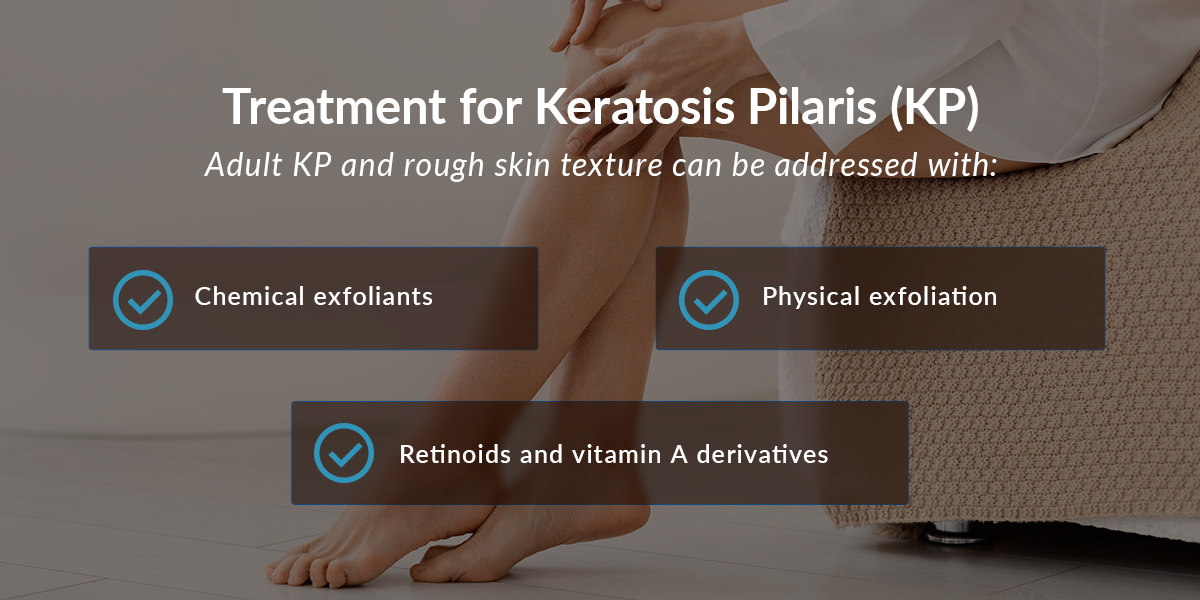
Adult KP and rough skin texture can be addressed with:
- Chemical exfoliants: Alpha hydroxy acids and beta hydroxy acids dissolve excess keratin. Urea and lactic acid can dissolve keratin buildup while speeding up cell turnover, smoothing your skin. Start with a low concentration and moisturize regularly.
- Physical exfoliation: Gently rubbing the affected area with textured cloths during while bathing can complement chemical exfoliation, but it’s important to be gentle. If your skin gets irritated, stick with just chemical exfoliation.
- Retinoids and vitamin A derivatives: These ingredients can normalize keratin and promote cell turnover, diminishing the look of bumpy skin. Start with a lower concentration of active ingredients to see how your skin reacts.
When at-home treatments aren’t enough, professional KP treatments can help stubborn cases:
- Laser and light therapy: Pulsed light (IPL) can also address pigmentation, while laser hair removal can target the hair follicle, reducing blockage. Fractional lasers can improve skin texture and help reduce KP by encouraging new collagen growth.
- Microdermabrasion: Professional microdermabrasion treatment can physically break up keratin plugs.
- Prescription-strength topical medications: Providers may offer retinoids, topical steroid creams, oral isotretinoin or other medications.
Supporting your treatment with hydration, humidity, soft clothing and a balanced diet can reduce KP flares and promote overall skin health.
Treating KP takes patience. Results may take up to 12 weeks or even more, and symptoms often return if care is discontinued. While it’s rare, irritation or infection can occur, especially if areas are picked or over-exfoliated. See a provider if you notice pain or discoloration.
Reclaim Smooth Skin
Keratosis pilaris isn’t dangerous and is highly treatable. If over-the-counter treatments and moisturizers haven’t worked, schedule an appointment with Berman Skin Institute. We can develop a customized plan to reveal your smoothest skin.