Increasing wildfires, fluctuating temperatures and changing air quality are all part of the evolving climate throughout California and around the world. These conditions can contribute to accelerated skin aging and the development of other skin conditions. Berman Skin Institute develops customized skin treatment plans to address your skin concerns.
How Climate and Weather Damage Skin
As climate change brings more extreme weather to the U.S., patients face new skin concerns, including:
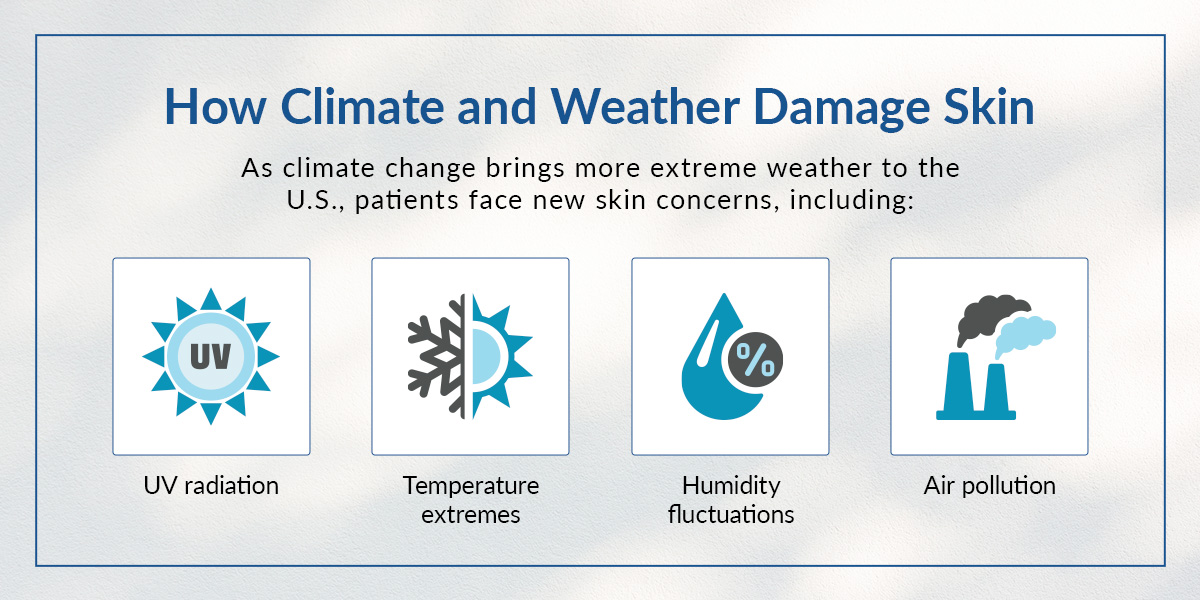
- UV radiation: UVB radiation penetrates the outer layers of the skin and causes early signs of aging. UVA penetrates past the epidermis into the dermis, affecting collagen and elastin at deeper levels. Even on cloudy and overcast days, you’re exposed to these harmful rays.
- Temperature extremes: Cold weather constricts skin blood vessels, reduces sebum, damages the barrier and increases water loss and sensitivity — factors that age skin. Gentle, moisturizing products are an important part of cold-weather skincare.
- Humidity fluctuations: Heat and high humidity can promote bacterial growth and increase sebum production. Even in hot weather, lightweight hydration is important, as high temperatures and sun exposure can cause skin to dry out.
- Air pollution: Standard skin care is about addressing the top layers of skin, but the fine air particulates that are part of air pollution can cause oxidative stress and damage the skin barrier. Pollutants can also land on the skin and lead to irritation, dermatitis and eczema. Pollution protection may minimize the risk.
Your Climate Change Skin Care Plan
When creating a climate skincare plan to protect your skin, choose products with these gentle ingredients:
- Antioxidants like vitamin C and niacinamide to help fight oxidative stress.
- Skin barrier-supporting ceramides.
- UV-filtering compounds to protect your skin from the sun.
Start with a broad-spectrum SPF, applied every morning before you go out and reapplied after exercise and every few hours during outdoor activity. Sunscreen and physical sun protection, like long sleeves and hats, are essential parts of environmental skincare in any climate.
Apply antioxidants in the morning, and use ceramides morning and evening to repair your skin barrier. Adjust your skincare for the seasons, switching to more hydrating formulations in winter and lighter, sun-protecting formulations in hot weather.
While these form the foundation, research is always developing climate-adaptive skincare. AI-powered diagnostics and hyper-customized formulations that adjust your skincare to your climate are being researched. Emerging treatments aim to strengthen skin against stressors and pollutants. Research into these technologies is ongoing.
Contact Berman Skin Institute for the Future of Skin Care
Berman Skin Institute provides laser, light therapies and other advanced treatments for weather-related skin concerns. Schedule a consultation for a customized treatment plan.