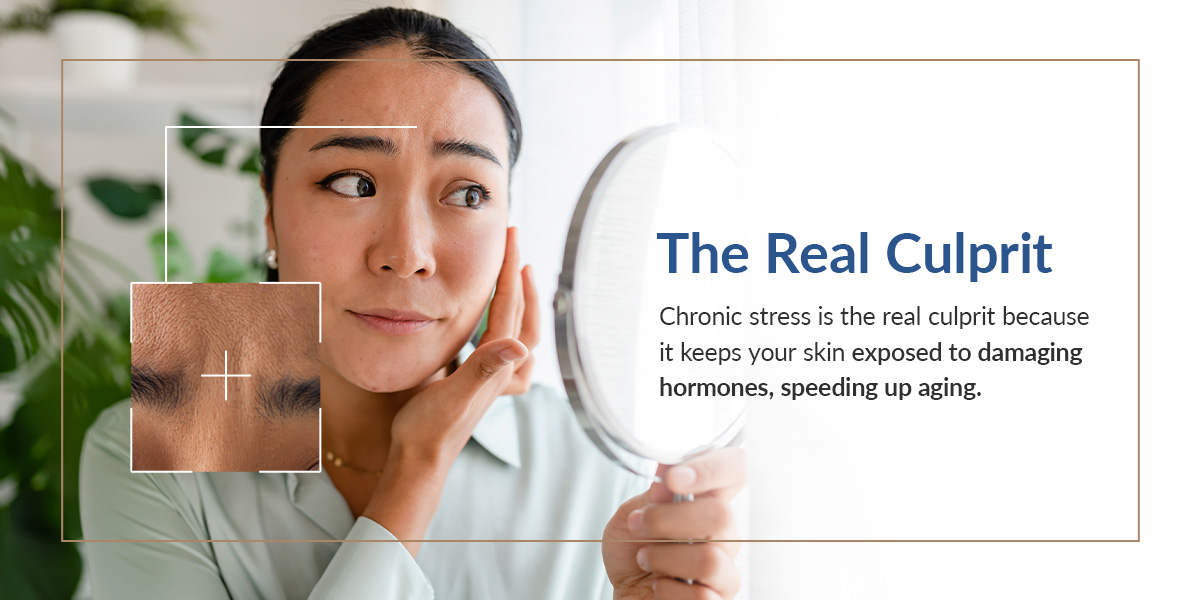
Understanding the stress-skin connection lets you go beyond your skincare routine to focus on the invisible saboteur that could be quietly harming your skin. At Berman Skin Institute, we empower you with information about the science behind your skin — and the advanced treatments to feel your best.
The Science of Stress and Skin Aging
While you may think of stress as something that happens in your brain, your skin and brain communicate through a system known as the skin-brain axis. When you’re stressed, it can lead to skin damage due to:
- Hormonal dysregulation: When you’re stressed, your body releases cortisol, the “stress hormone.” Cortisol increases alertness for survival, but chronic exposure may reduce collagen, damage the skin barrier, increase inflammation and hinder repair — accelerating aging.
- Inflammation: Prolonged stress releases cortisol and norepinephrine, which can contribute to inflammation in the body. This can show up as wrinkles and other skin problems.
- Oxidative stress: At the cellular level, oxidative stress can contribute to dull skin.
- Poor sleep: Upset disrupts sleep, which is critical for nighttime skin healing and for triggering nocturnal growth hormones.
- Overexertion of some muscles: Furrowing your brow, clenching your jaw and making other stress-related expressions can lead to wrinkles, especially around the eyes, forehead and between the brows.